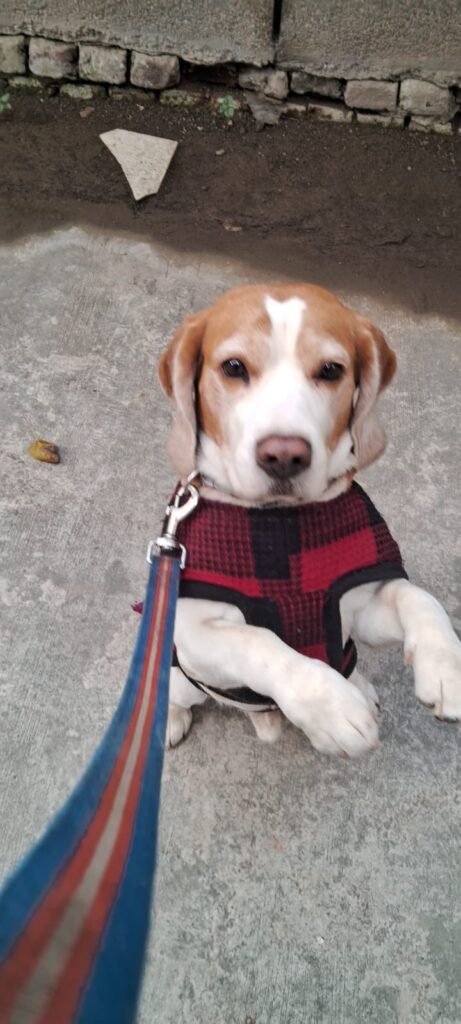
Beagles are the “happy hounds” of the dog world. Often described as “merry” and “even-tempered,” they are iconic family pets, but their behavior is almost entirely driven by two things: their nose and their pack-oriented nature.
Here is what you can expect from a Beagle’s behavior:
- The “Nose with Four Legs“
A Beagle’s world is a map of smells. This instinct overrides almost everything else.
Selective Hearing: If a Beagle catches a scent, their “ears turn off.” This isn’t stubbornness in the traditional sense; they are biologically programmed to focus on a trail.
The Escape Artist: Beagles will dig under or climb over fences if they smell something interesting on the other side. They should never be off-leash in an unenclosed area because they will follow a scent for miles without looking back.
Counter Surfing: Their noses are masters at finding food. Expect them to investigate every countertop and trash can.
- Vocalization (Bark, Howl, and Bay)
Beagles don’t just bark; they have a musical repertoire that can be loud for neighbors:
The Bark: Standard “someone is at the door” sound.
The Bay: A deep, melodic, “yo-del-ay-hee-hoo” sound. In the wild, this told hunters they found a trail. At home, they might bay at a squirrel or even the mailman.
The Howl: Usually reserved for when they feel lonely or are “talking” to sirens.
- Extremely Social “Pack” Mentality
Beagles were bred to live and work in large packs, which translates into a very specific social behavior:
Separation Anxiety: They hate being alone. A lonely Beagle is often a vocal and destructive Beagle. They thrive in households where people are home often or where there are other dogs.
Friendliness: They are notoriously poor guard dogs. They usually greet strangers with a wagging tail rather than a warning.
Great with Kids: Their sturdy build and tolerant nature make them one of the best breeds for active children.
- Training Challenges
Beagles are smart but independent. Unlike a Golden Retriever, they don’t live to please you—they live to find treats.
Food Motivation: You must use high-value treats (chicken, cheese) for training. If there’s no “paycheck,” they might ignore your commands.
Recall: Even the best-trained Beagle often has unreliable recall once they are “on a scent.”
Summary Table
Trait Level Note
Affection High Loves to snuggle, but can be independent.
Energy Moderate/High Needs at least 60 mins of exercise/sniffing daily.
Vocalness Very High Likely to bay at squirrels or howl when lonely.
Patience High Very tolerant of kids and other dogs.
Recall Low Cannot be trusted off-leash in open areas.
Export to Sheets
Top Tip for Beagle Owners: Instead of just walking your Beagle, take them on a “Sniffari.” Let them stop and smell every blade of grass for as long as they want. Ten minutes of intensive sniffing is as mentally exhausting for a Beagle as a 30-minute run!
Would you like some ideas for scent-based games to keep your Beagle occupied indoors?